
Sleeping on a Shikibuton in Winter and Summer
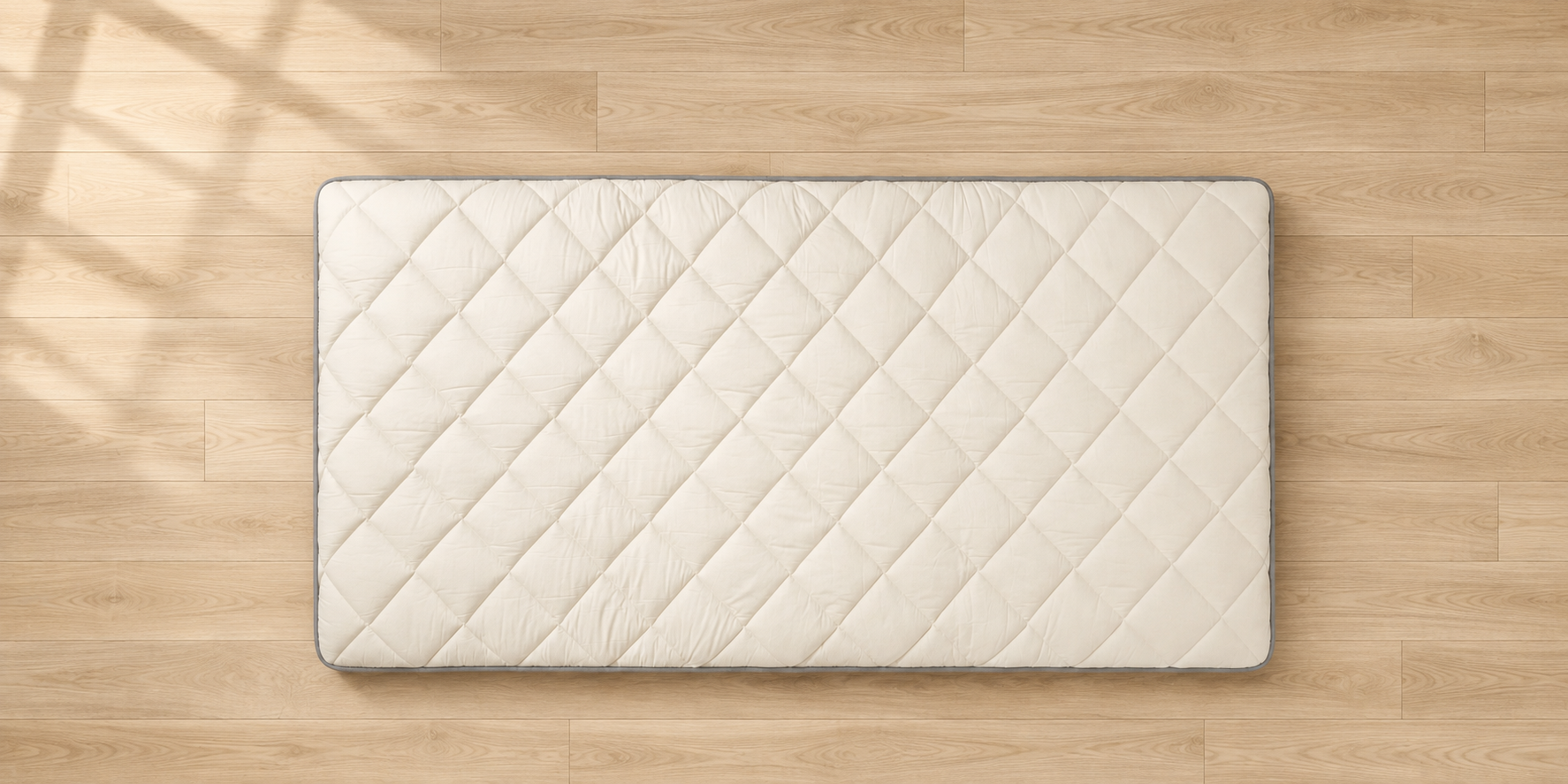
Since our international store opened in August, we’ve received more than 200 orders from customers in many parts of the world. When we opened, there were no customer reviews on our site yet. Thank you to everyone who chose to try a Japanese shikibuton at home.
In a Japanese tatami room, bedding goes down at night and can be folded away in the morning, leaving the room free for the rest of the day. If you first slept on a shikibuton at a Japanese inn, someone else probably took care of the bedding. At home, you get to find a routine that suits your room and your climate. Here’s where to start when the floor feels cold, the nights get hot, or you find dampness underneath.
Will a shikibuton feel cold in winter?
It can, especially over tile or stone. A shikibuton sits close to the floor, and the floor can stay cool even when the room has warmed up. Start with a warmer duvet, a warmer sheet and a comfortable room temperature.
If the chill is coming from below, check that your floor is dry and level. Then check your model’s instructions for a suitable breathable layer underneath. Air that layer separately in the morning.
Will a wool-blend shikibuton feel too hot in summer?
Wool fibres can absorb and release water vapour. How warm you feel still depends on the room, the humidity and what you sleep under. Try a lighter cover on hot nights and use air conditioning or a dehumidifier as needed.
In humid weather, pay particular attention to the underside. Even when the room feels cool, little air may reach the part of the shikibuton that rests on the floor.
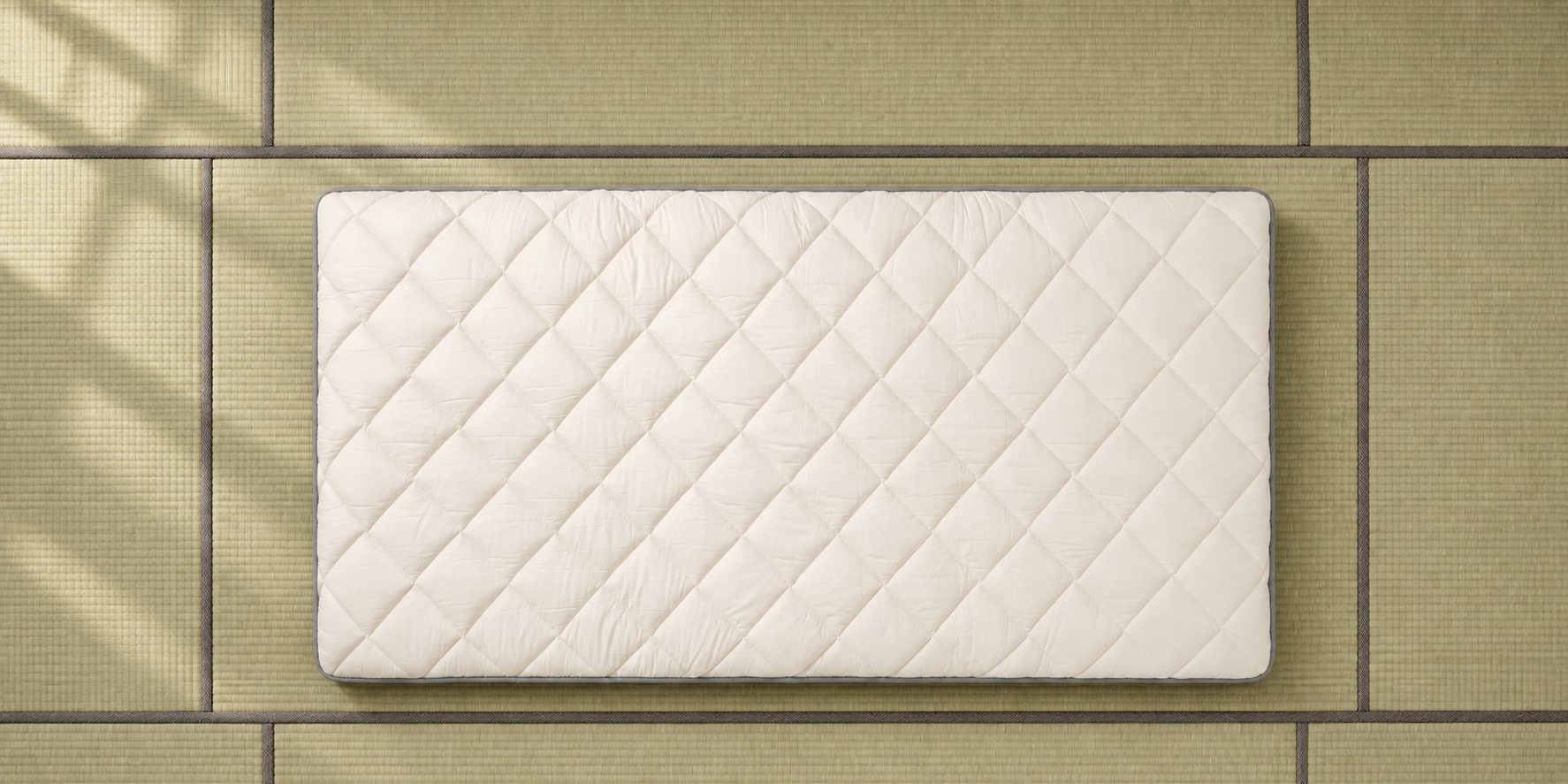
Air the underside before folding it away
After getting up, lift or prop up the shikibuton so air can reach both the underside and the floor. Let the bedding dry before folding it away, and let the floor dry before laying it out again. For turning, rotating or airing in sunlight, follow your model’s instructions in the shikibuton care guide.
If you’re considering a shikibuton, look around the room you’d use. Where would you lay it out at night, and where would you prop it up in the morning? Once you know where it can air, it’s much easier to picture how it will fit into everyday life.