
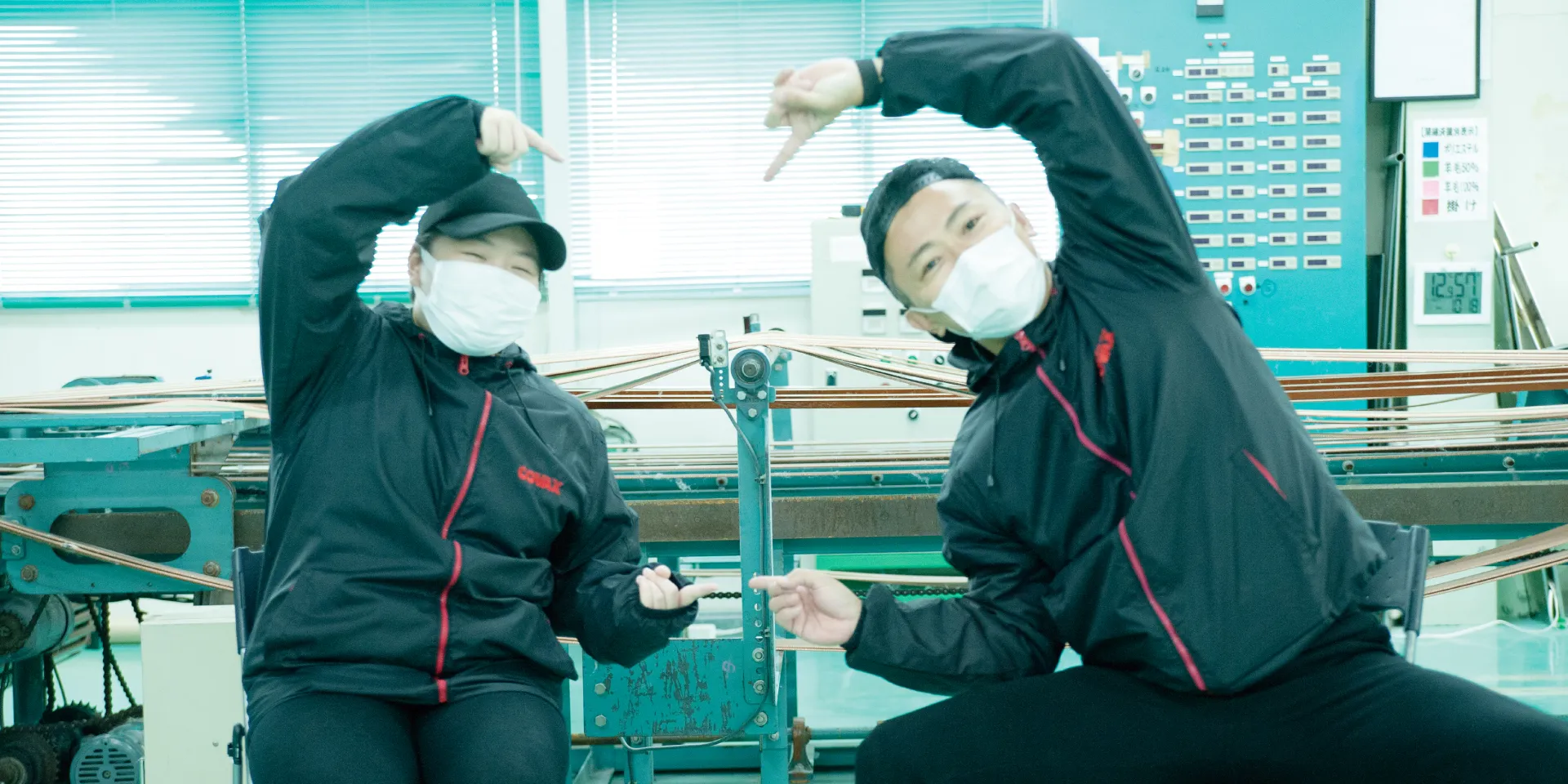
A member of the Operations Team who joined about four months ago. She rotates through the multi-head quilting machine (the diamond-pattern quilting of shikibuton) and the inner-cotton roll-shaping process, and also takes part in pillow making and inspection.
Four months in
I have only been here four months — one of the workshop’s newer members. My daily rotation covers the multi-head quilting machine (the diamond-pattern quilting of shikibuton) and the inner-cotton roll-shaping process, and I also work the pillow-making and futon-inspection posts. The time is short, but my colleagues have already made me feel this is a place worth staying for the long term.
The yardstick of “if I had bought it”
At the moment a finished shikibuton reaches the customer’s hands, “how will the customer feel” and “if I had bought this and it arrived” — I use these two questions to check the one I have just made. The instant I find the slightest doubt I ask a senior — that is the most important posture for a newcomer, and the first thing the workshop taught me.
Wanting to learn more
“The qualifications are appealing, but first the mechanical technique” — that is how I rank my priorities. I can run the multi-head quilting machine now, but when “skipped stitches” or “thread slack” appear, I still rely on seniors. I hope to be a little more independent each month than the last.
A workshop that makes you want to stay
What makes me want to stay — colleagues who cooperate, help that comes before you even have to ask, plus clear craft standards. These “soft benefits” together make one want to invest for the long term more than any condition could. I hope I am still here four years from now.