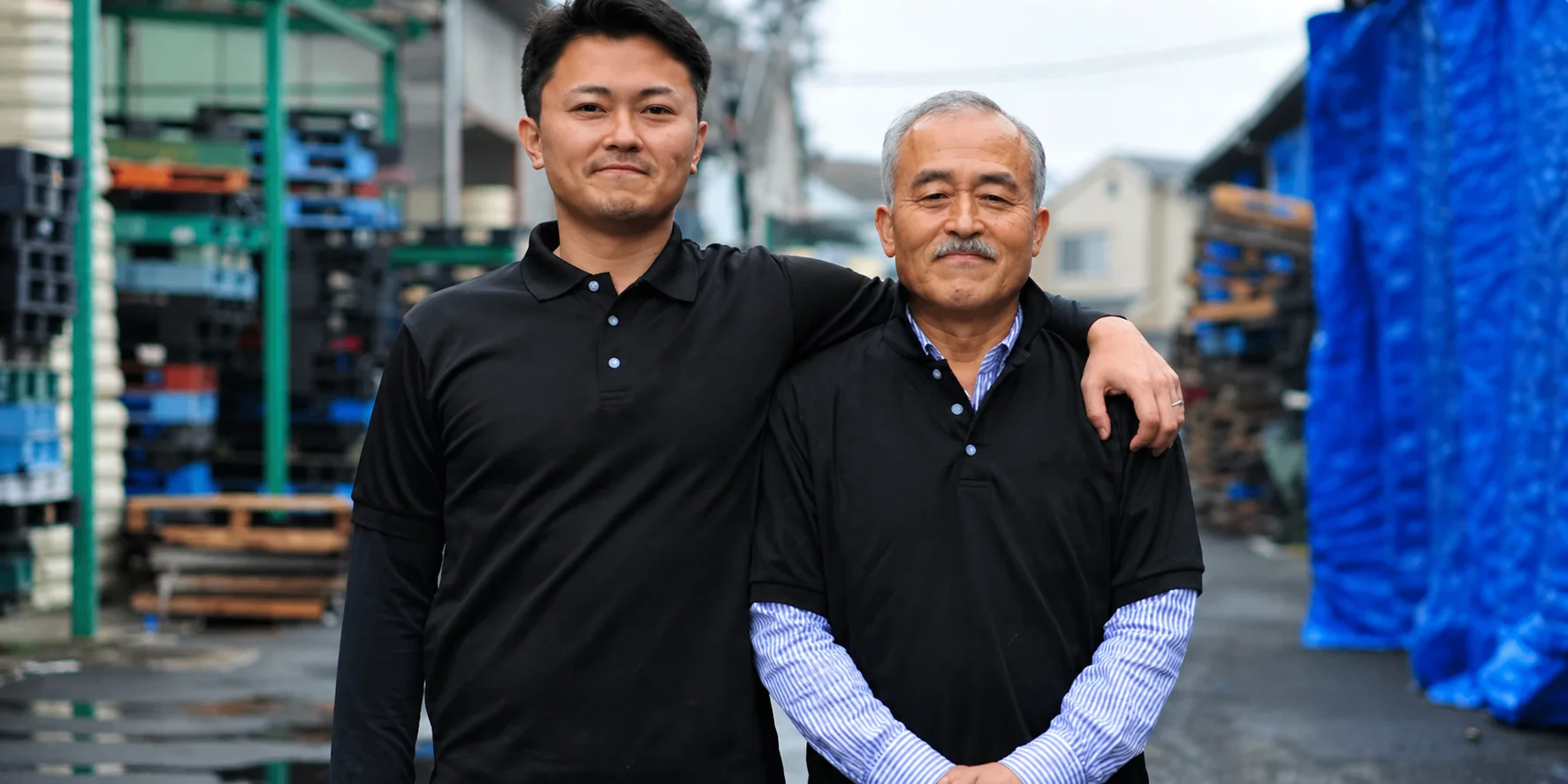
The Fifth Generation owner of this century-old family workshop. He joined in 2012, launched online direct sales in 2013, and formally became representative in 2017.
On taking over
The workshop has reached me as the Fifth Generation. When I joined in 2012 I did not take charge at once; first I rotated through every process — from raw-cotton handling, fine carding and sewing, to shipping and customer service. Only after running each stretch myself did I have the standing to call myself “a person of the workshop.” A family workshop is not made by printing the surname on a business card; it means making every shikibuton worthy of that name.
The year of online direct sales
In 2013 we launched online direct sales. For the workshop this was not merely a shift of channel but a choice of direction — “no longer letting a wholesaler stand between the workshop and the customer.” From then on, customer feedback was no longer diluted by a middle layer; the workshop’s story could be told directly to the person buying the futon. For the first twenty years the workshop did wholesale; for the next twelve we re-learned “direct conversation.”
What the word “workshop” means
A workshop is not a factory. A factory pursues standardization and mass output; a workshop pursues “this one was made by a particular person.” In our workshop the sewing stations have names — Inose’s station, Shida’s station, Shimizu’s station. When a shikibuton leaves, the person who made it remembers which one it is. That memory is the most direct difference between “workshop” and “factory.”
Facing overseas
2023 marked the workshop’s 150th year, and the year our three lines — HIMARI / SORA 宙 — formally went on sale overseas. Households in Asia and abroad differ from those in Japan — different floor plans, climate, rhythms of life. But the wish “to sleep well” is shared. The workshop hopes to turn over 150 years of accumulated craft into products that families around the world can use just as naturally.
The next decade
I am now in my forties; by the workshop’s rhythm of succession I have roughly another twenty years as representative. In those twenty years I hope the workshop can achieve three things: that staff take pride in the workshop, that customers make “using the workshop’s shikibuton” part of daily life, and that the next representative need never worry about the survival of the family business. Nothing else is the core.