Shikibuton · Shikifuton · Japanese futon mattress
What is a shikibuton?
One object, several English spellings.
Shikibuton, shikifuton, and shiki futon are English romanizations used for the Japanese term 敷き布団. On this site, they refer to the same category of bedding.
It is the sleeping layer, not the floor mat.
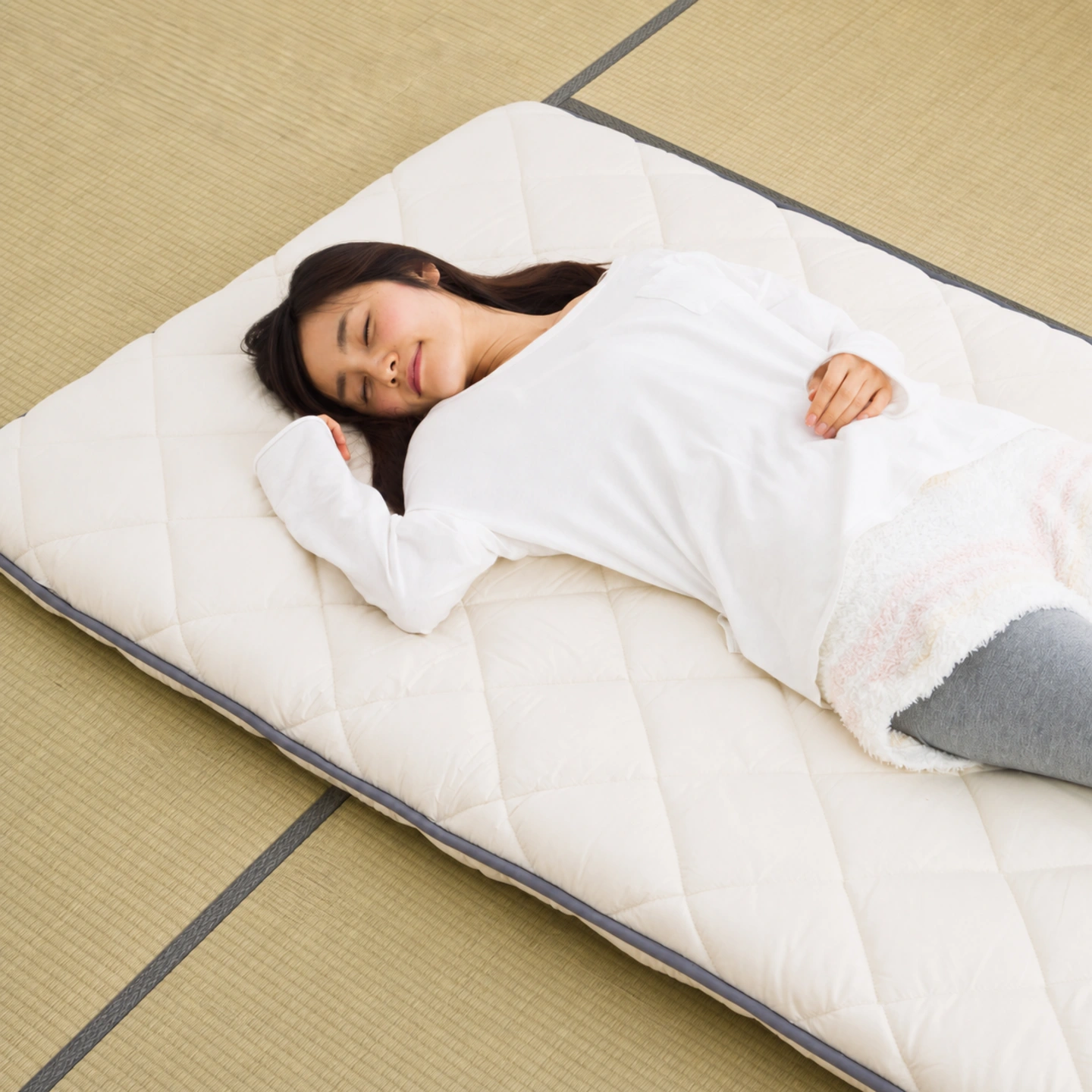
The shikibuton is the mattress; tatami is the mat beneath it. In the United States, “futon” often means a sofa bed. A shikibuton is bedding that you lay out and put away. Materials and thickness vary by model: the name alone does not mean a mattress is all cotton, free of synthetic fibers, or made in Japan. Explore shikibuton materials, construction, and model differences.
Movement is part of care.
After sleeping, lift the shikibuton so air can reach its underside and the surface beneath it. Check both for moisture, especially on a hard floor, and let the bedding dry before folding it away. A moisture-control layer does not replace regular airing. Follow the care instructions for your model; OFUTON KOBO shikibuton should not be machine-washed or soaked.
OFUTON KOBO makes HIMARI and SORA in its own workshop in Oyama, Tochigi, Japan. Both have a cotton outer fabric and filling made from a blend of wool and polyester. See how our shikibuton are made.
Japanese dimensions come first.
Do not choose by a U.S. mattress name alone. Compare the official centimeter dimensions to the exact available floor, platform, or frame area. Compare dimensions, approximate weights, and folded sizes.