Firm support
Use a level surface that supports the full shikibuton without deep sagging.

Choose your country or region
All countries and regions →Americas
Europe
Asia Pacific
Middle East
Norway guide · Japanese floor bedding
Shikibuton, not sofa bed
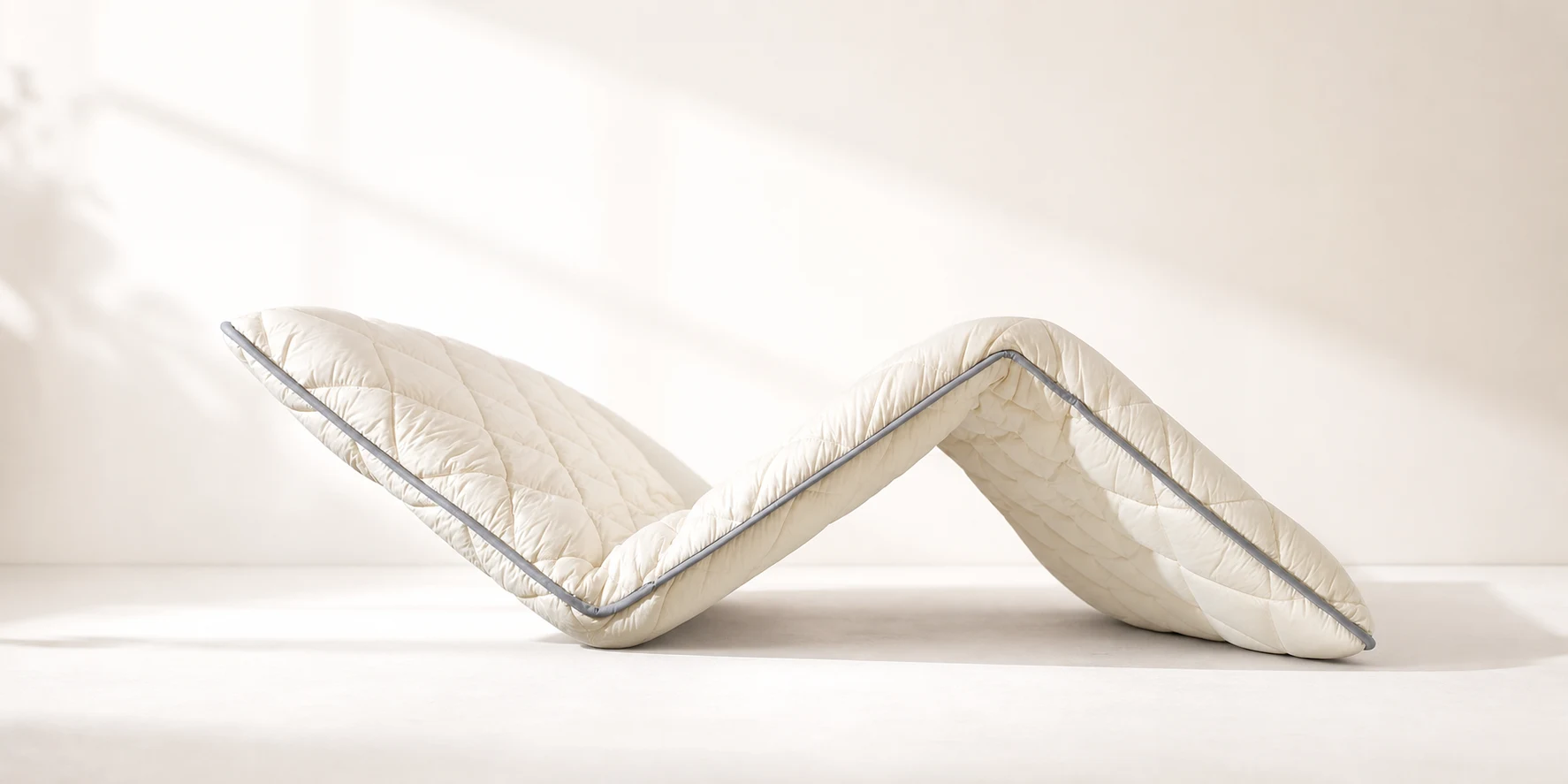
In British English, “futon” often means a convertible sofa. A Japanese shikibuton is different: it is the mattress layer of futon bedding. It rests on tatami, a suitable platform, a ventilated frame, or a carefully managed hard floor, then folds for airing and storage.
Use a level surface that supports the full shikibuton without deep sagging.
Lift, fold, or stand it regularly so moisture does not remain trapped underneath.
Choose from exact centimetre dimensions, not assumptions based on Norwegian mattress labels.
Two models · One atelier
Prices include delivery from Japan. Any import duties or taxes charged on arrival are paid separately by the recipient. See your country’s Terms of Sale for the contribution towards import charges and how to claim it.
01
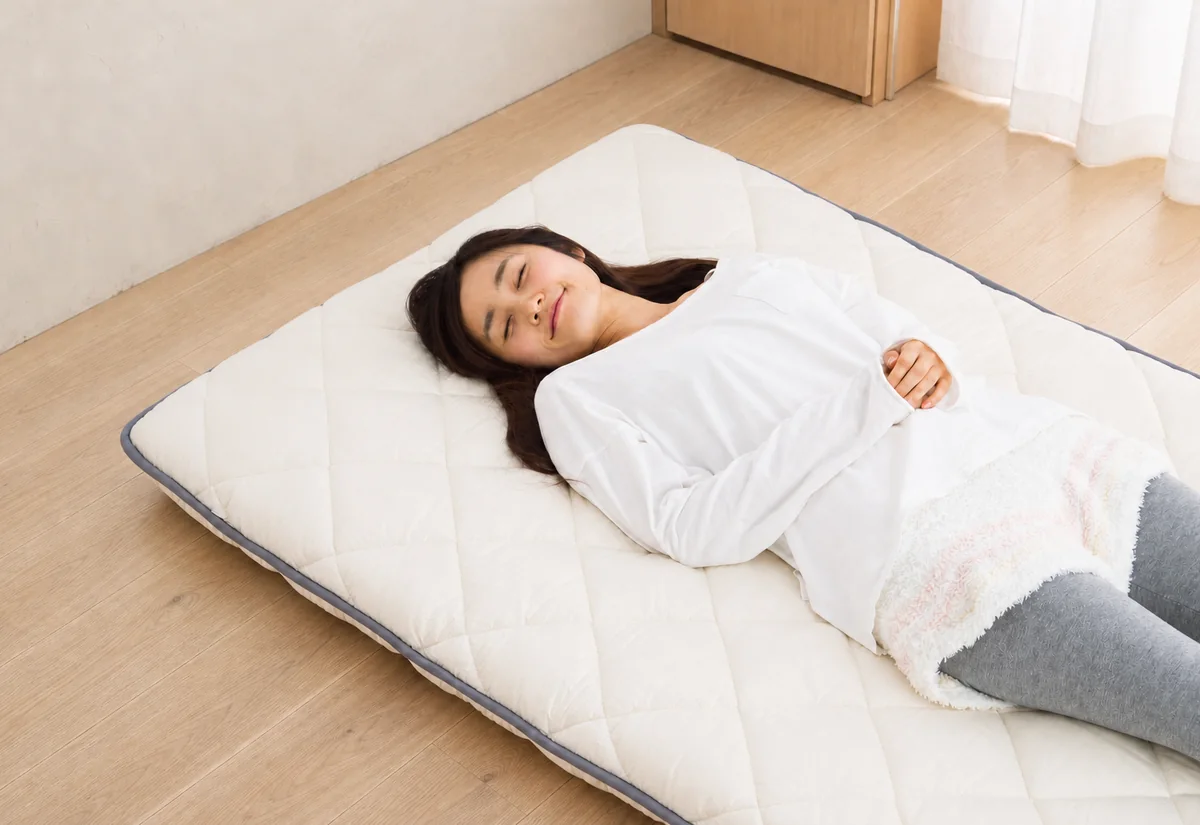
Everyday signature
25% wool · Approx. 10 cm
Balanced support, natural warmth, and an approachable feel for everyday floor sleep.
02
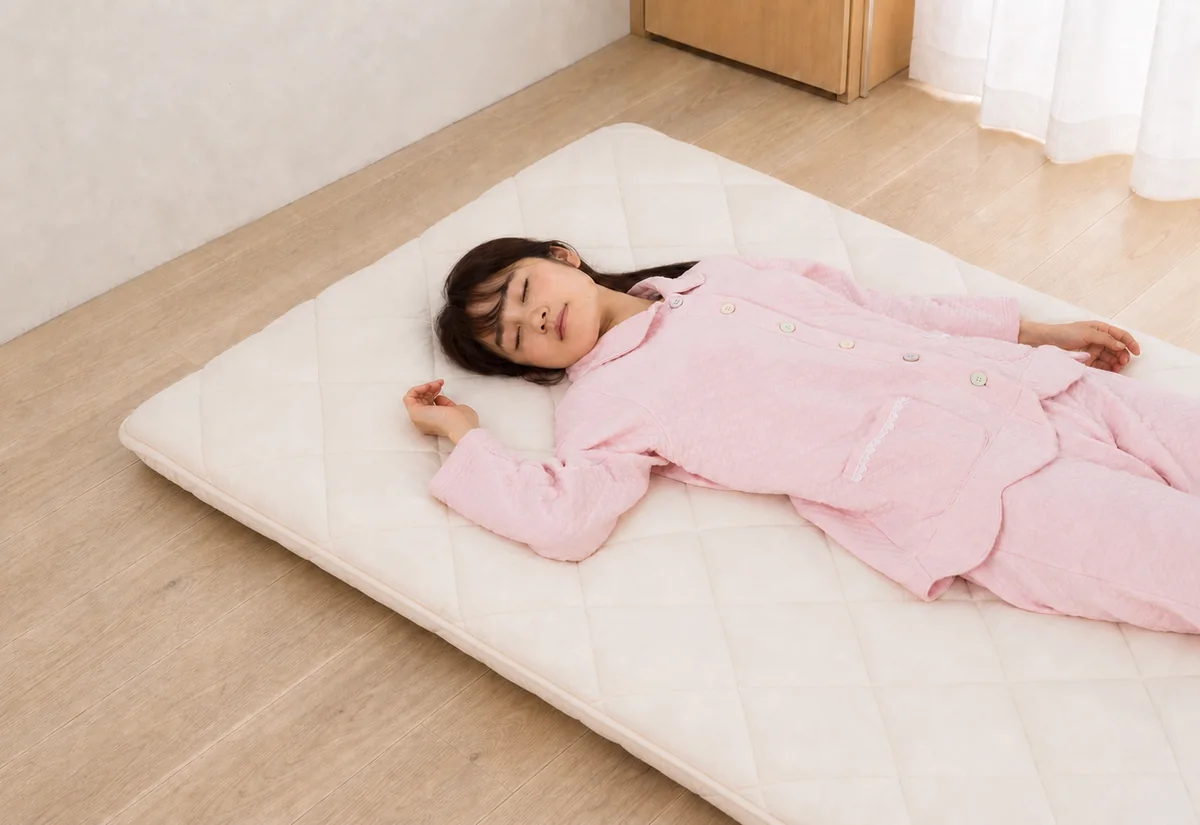
150th anniversary limited edition
50% premium wool blend · Approx. 12 cm
A generously lofted expression of the traditional Japanese shikibuton, renewed for 2026.

Made in Oyama, Tochigi
Each product page sets out the model’s dimensions, materials, construction, care and place of manufacture. For current sizes, prices and delivery information, choose your delivery country and continue to the official store.
Visit our workshopMoisture routine
Warmth and humidity move between the sleeper, shikibuton, and base. A firm surface alone is not enough: check for condensation, air both sides, wash removable sheets separately, and never machine-wash or soak the complete shikibuton.
Inside a shikibuton
A shikibuton is quilted in layers rather than built on springs. HIMARI is approx. 10 cm thick: wool-blend filling, 25% wool, quilted above and below an approx. 8 cm firm polyester support core developed in our own workshop. SORA is approx. 12 cm thick, with a 50% premium wool blend for a fuller, balanced feel. Both have a 100% cotton outer fabric and fold into thirds for airing and storage.
HIMARI combines a firm polyester support core with quilted wool-blend layers for surface cushioning. SORA offers fuller cushioning with a balanced medium feel. Check the construction of each model when comparing it with a topper or another floor mattress.
Sizes and weights
Japanese size names do not guarantee a matching local length and width, so compare the centimetre dimensions with the floor space, platform or frame you have. These are the sizes we deliver to your country, with the weight and the folded size of each one.
| Model | Size | Length × width × thickness | Weight | Folded in three | In local bed terms |
|---|---|---|---|---|---|
| HIMARI | Japanese Standard Single | 210 × 100 × approx. 10 cm · 82.7 × 39.4 × 3.9 in | Approx. 5 kg | Approx. 70 × 100 × 30 cm | Wider than a standard 90 cm single bed. |
| HIMARI | Comfort Single | 210 × 120 × approx. 10 cm · 82.7 × 47.2 × 3.9 in | Approx. 6 kg | Approx. 70 × 120 × 30 cm | The width of a 1.5-person bed. |
| HIMARI | Extra-Wide Single | 210 × 140 × approx. 10 cm · 82.7 × 55.1 × 3.9 in | Approx. 7 kg | Approx. 70 × 140 × 30 cm | A wider 1.5-person bed: spacious for one, and can suit two smaller sleepers. |
| SORA | Japanese Standard Single | 200 × 100 × approx. 12 cm · 78.7 × 39.4 × 4.7 in | Approx. 6 kg | Approx. 67 × 100 × 36 cm | Wider than a standard 90 cm single bed. |
| SORA | Extra-Wide Single | 200 × 140 × approx. 12 cm · 78.7 × 55.1 × 4.7 in | Approx. 8 kg | Approx. 67 × 140 × 36 cm | A wider 1.5-person bed: spacious for one, and can suit two smaller sleepers. |
Common Norwegian bed widths: Single 90 cm · 1.5-person bed 120–140 cm · Double 160–180 cm. Measure your floor, platform, or frame before ordering.
Made in Japan, and verifiable
OFUTON KOBO Co., Ltd. sews, inspects and finishes every shikibuton in its own workshop in Oyama, Tochigi, Japan. The family business began in 1873 as a cotton shop in Tokyo and is led today by Nakajō Yūsuke, the fifth generation. The manufacturer is a J∞QUALITY member company, futon manufacturer certification No. K2600190003, and a member of the Japan Futon Manufacturers' Co-operative.
This matters because “Japanese-style” bedding sold abroad is often made elsewhere to a different specification. Ours is made in Japan and shipped from Japan, and the people who make it are named on this site.
No. A Japanese shikibuton is a foldable sleeping layer laid on a firm surface. It is bedding, not a convertible sofa frame.
Yes, when the model suits the sleeper and it is used on a clean, firm, level, and breathable surface. Regular airing and moisture checks are part of nightly floor-bedding care.
A hard floor can work, but it does not breathe like tatami. Use a suitable moisture-control layer, lift the shikibuton after sleep, and check both the underside and floor regularly.
No. OFUTON KOBO uses Japanese centimetre dimensions. Inch values are approximate references, so measure the intended floor, platform, or frame before ordering.