
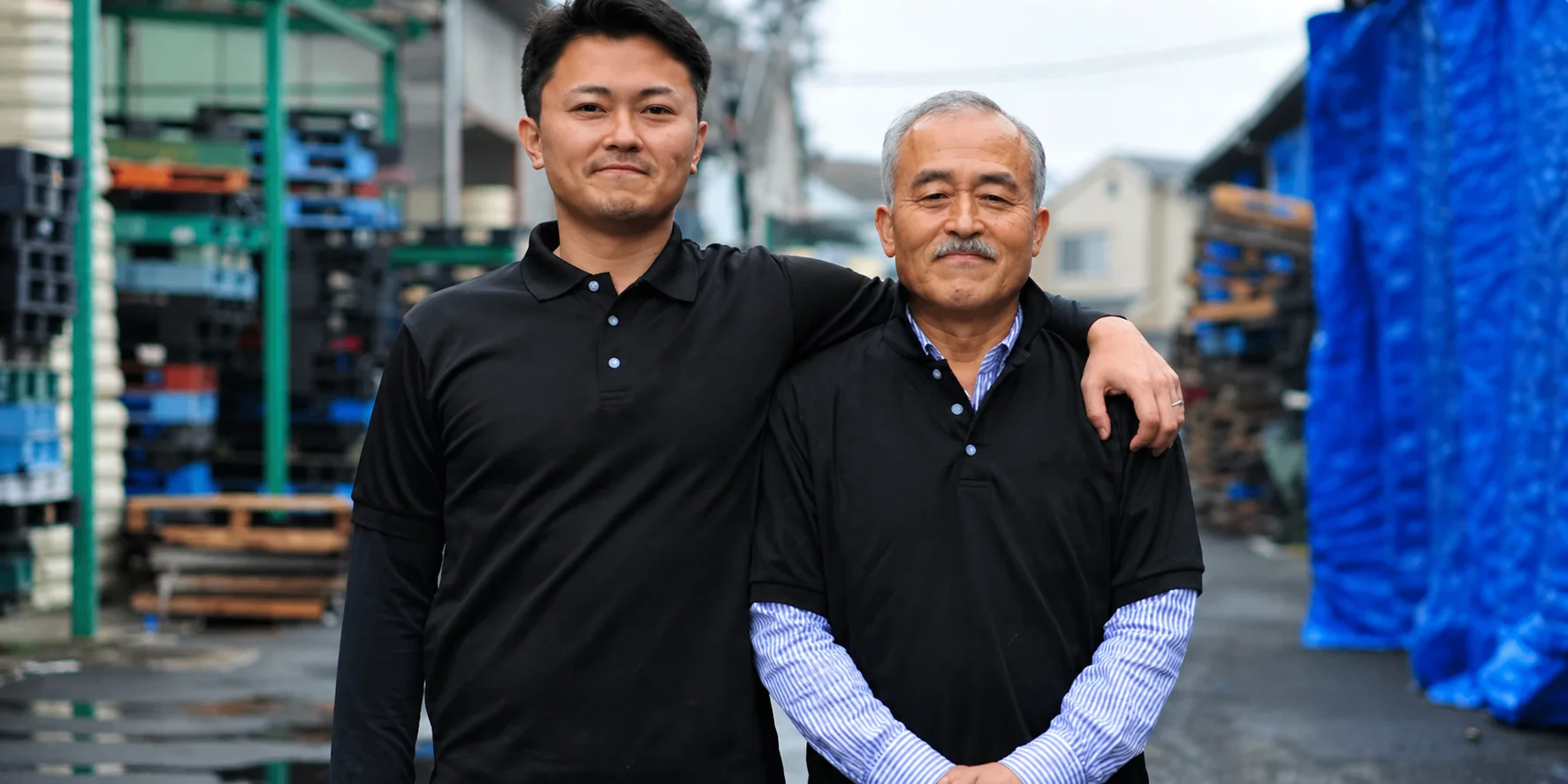
Father of the current representative Nakajō Yūsuke; took office as representative in Heisei 1 (1989). He led the workshop through its civil-rehabilitation crisis of 2001.
Taking the workshop from my forebears
In Heisei 1 (1989) I took this workshop over from my forebears. The age of mass retailers was arriving and price competition was heating up — how a century-old family workshop could carry on was the most immediate question of my generation. What I inherited was not only the workshop itself, but the stubbornness — kept since 1873 — of never outsourcing a process.
The crisis of 2001
The civil-rehabilitation filing of 2001 is a passage in the workshop’s history that is hard to go around. The family business met pressures it could not bear alone, and had to ask openly for help. Yet it was precisely in that lowest period that we re-examined “what the workshop exists for” — was it for maximum profit, or to carry on the craft of the Japanese futon?
Setting out again from crisis
After emerging from civil rehabilitation, the first thing the workshop did was not to expand scale, but to recalibrate its craft standard to a level “we could recommend to family without a guilty conscience.” It sounds like a step back, but it was in fact the bedrock of the steady management of the next twenty years. Without that step back there would have been no online direct sales in 2013, and no smooth generational handover in 2017.
Handing it to the next generation
In 2017 I passed the representative’s seat to the Fifth Generation, Yūsuke. Handing the family business to the next generation is not an ending but the way a century-old workshop endures. I now return to the workshop now and then, and seeing the staff and Yūsuke doing the same thing begun in 1873 — making shikibuton that let customers sleep well — is this generation’s greatest peace of mind.